
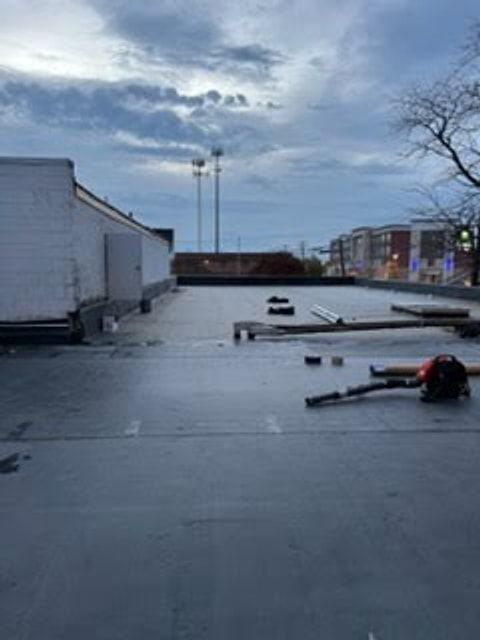
Why Your Roof Only Leaks in Heavy Rain
A roof that only leaks in heavy rain usually has one weak detail: flashing, a pipe boot or a valley. What causes it and how roof leak repair finds the source.
Check your roof safely from the ground after a summer storm: what wind and hail damage look like, signs inside, and when you need storm damage roof repair.
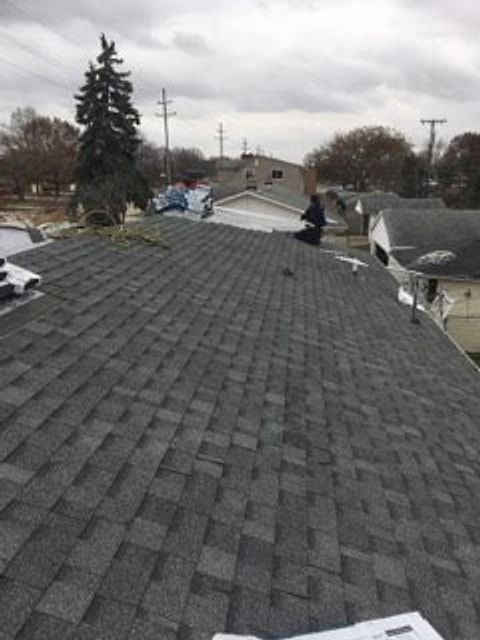
After a summer storm, check your roof from the ground, not from a ladder. Walk the whole house with binoculars, look for missing or creased shingles, dents in gutters and vents, and granules piling up at the downspouts, then check the attic and top-floor ceilings for new stains. If you find missing shingles, an active leak or fresh hail dents on metal, have a roofer take a closer look and tell you whether you need storm damage roof repair. Never climb onto a wet roof.
Wet shingles are slick, and storm-loosened granules roll underfoot like sand on a tile floor. A ladder in gusty wind is worse. Wait for daylight and dry weather, and leave the climbing to someone with fall protection.
Before you walk the yard, look for downed power lines. Treat any wire on the ground as live, stay well clear, and call your utility or 911. Look up before you walk under trees, too. A cracked limb hung up in the branches can drop hours after the wind stops.
Take your phone and a pair of binoculars. Photograph as you go, wide shots first so it’s clear which side of the house you’re on, then close-ups.
The National Weather Service calls a thunderstorm severe when it brings wind gusts of 58 mph or more, hail an inch across (about the size of a quarter) or larger, or a tornado. Southeast Michigan’s summer storms bring both straight-line wind and hail, sometimes in the same ten minutes, and the two leave different marks.
| Sign | Wind | Hail |
|---|---|---|
| Where it shows up | Edges, ridges, rakes and the side facing the storm | Scattered across every exposed slope, no clear pattern |
| Shingles | Missing, torn, lifted or creased tabs | Dark bruises, spots of missing granules, cracks |
| Metal | Bent or peeled-back flashing | Round dents in gutters, vents and flashing |
| On the ground | Whole shingles and ridge caps in the yard | Granules at the downspouts, shredded leaves |
Hail about an inch across is where asphalt shingles commonly start to take damage. Older shingles that have already lost granules can be hurt by smaller hail, while a newer, heavier shingle may come through the same storm fine. A creased shingle is a problem even if it lies back down. The fold weakens it and its seal is often broken, so the next storm can take it.
A damaged roof doesn’t always drip on day one. Check these places:
Water runs along rafters and decking before it drips, so the stain is often a few feet from where the water got in.
Michigan’s insurance regulator, DIFS, notes that a policy may not cover further damage if reasonable temporary repairs, like tarping a hole, weren’t made. If you plan to file a claim, hold off on permanent repairs until your insurer has seen the damage.
DIFS also warns that after severe weather, people posing as contractors or adjusters go door to door. Take a business card, not a contract. Nothing about storm damage needs a signature on the driveway.
Call for a closer inspection if you see any of these:
A roofer can do what you shouldn’t: walk the roof, lift tabs to check the seal, and find bruises you can feel but not see from the ground. If the damage is limited, it’s usually a roof repair: a handful of shingles, a pipe boot, a length of flashing. If the roof was near the end of its life before the storm, a repair may only buy time, and it’s worth knowing what a roof replacement costs in Michigan before you decide. For a once-over after a storm when you’re not sure what you’re looking at, start with a roof inspection.
Look from the ground as soon as it’s safe and dry, ideally within a day or two. Report likely damage to your insurer promptly, since policies expect timely notice and a lifted shingle tends to get worse with the next storm.
Yes. Hail can bruise shingles and knock off granules without breaking through, which shortens the shingles’ life and can let water in months later, so a close inspection after a hailstorm matters even when the ceilings are dry.
Not on a wet, steep or windy roof, and not without fall protection. Have a roofer tarp it and keep the receipt, since reasonable temporary repairs help protect an insurance claim.
Hail about an inch across, roughly the size of a quarter, is where asphalt shingles commonly start to show damage. Older, worn shingles can be hurt by smaller hail, and newer, heavier shingles may need larger stones.
Call and ask — or send the form and we'll come out, look, and give you a written estimate. Free for homes and businesses.
Keep reading
A roof that only leaks in heavy rain usually has one weak detail: flashing, a pipe boot or a valley. What causes it and how roof leak repair finds the source.
How a roof insurance claim Michigan homeowners file after hail works: documenting damage, the adjuster visit, ACV vs. replacement cost, and red flags.
Ice dam prevention for Michigan homes: why ice dams form, the attic fixes that stop them, an honest look at heat cables, and what to do if water gets in.