
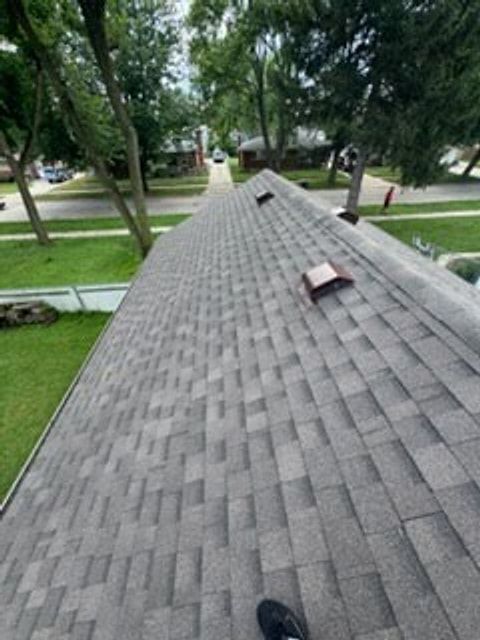
Attic Ventilation: The Part of Your Roof You Never See
How attic ventilation works on a Michigan home: intake and exhaust, the 1/150 and 1/300 rules, blocked soffits, and the signs your attic isn't breathing.
Residential roofing
A new roof is the one exterior job you want done once. Here's how a full replacement goes, start to finish, on homes across Oakland and Macomb County.
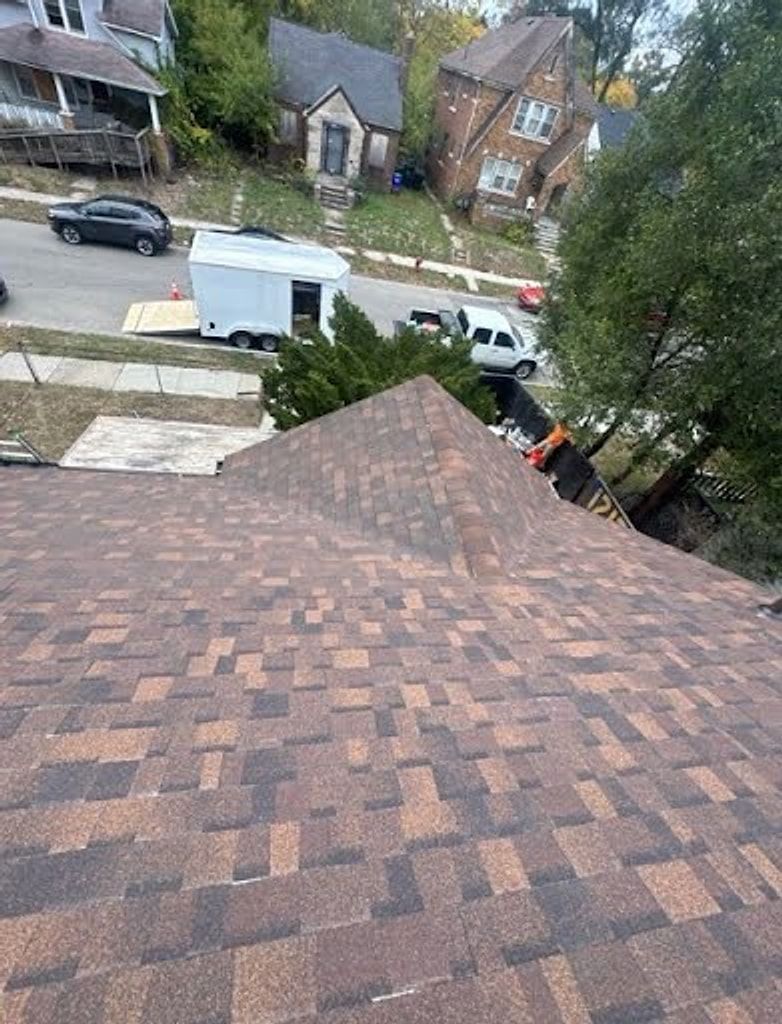
A roof replacement means everything comes off — every layer of old shingles and underlayment, down to the wood deck — and a complete new roof system goes on: repaired decking, ice and water shield, underlayment, flashing, ventilation and shingles. Done that way, it should be the last roof most homeowners ever have to think about.
A roof is a system, not just shingles. The parts you never see are the parts that decide whether it lasts 15 years or 30.
You don’t need a new roof just because a house is for sale or a neighbor got one. You probably do if you’re seeing several of these:
If it’s one isolated problem on an otherwise healthy roof, a repair is usually the better money. Our guide to repair versus replacement walks through how to tell.
Much of Rochester Hills, Troy, Shelby Township and Sterling Heights was built out between the 1970s and the early 2000s. A lot of those homes are on their second roof now, and some are already carrying two layers. Add Michigan’s freeze–thaw cycles, ice dams and summer hailstorms, and a roof here works harder than the warranty sheet assumes.
That’s why the details above matter more than the shingle color. If you’re budgeting, start with our Michigan roof replacement cost guide, and see architectural vs. 3-tab shingles for the material choice.
J&M Roofing replaces roofs across our whole service area — about 60 miles around Rochester Hills. Book a free estimate and you’ll have a written number for your house, not a ballpark.
FAQ
Most single-family homes around Rochester Hills are torn off and re-roofed in one to two days. A steep or cut-up roof, more than one layer to remove, or a lot of rotten decking can add a day. Your estimate gives you the expected schedule before you commit.
In most Michigan cities and townships, yes. Re-roofing a house normally needs a building permit and a final inspection from the local building department, and the roofing contractor usually pulls it. Ask to see the permit before work starts.
Sometimes, but rarely worth it. The Michigan Residential Code allows a second layer only in limited cases and never a third, and a layover hides soft decking and old flashing problems instead of fixing them. A full tear-off down to the deck is the right job on almost every home.
It depends on the size and pitch of the roof, how many layers come off, how much decking needs replacing and which shingle you choose. A free estimate gives you a written, itemized number for your house, and our Michigan cost guide explains the typical ranges.
Related reading
How attic ventilation works on a Michigan home: intake and exhaust, the 1/150 and 1/300 rules, blocked soffits, and the signs your attic isn't breathing.
How to vet a roofing contractor Rochester Hills homeowners can trust: the state license, insurance certificates, the city permit and an itemized estimate.
Architectural vs 3-tab shingles on a Michigan home: how each is built, wind ratings, lifespan, the cost gap, and when a Class 4 impact shingle makes sense.
Call and tell us what's going on with your roof, or send the estimate form. We'll set up a time to come out and look.