How to Prevent Ice Dams Before Michigan Winter
Ice dam prevention for Michigan homes: why ice dams form, the attic fixes that stop them, an honest look at heat cables, and what to do if water gets in.
Residential & commercial
A coating is a smart way to add years to a roof that's still sound underneath. It isn't a cure for one that's already failed — and we'll tell you which one you have.
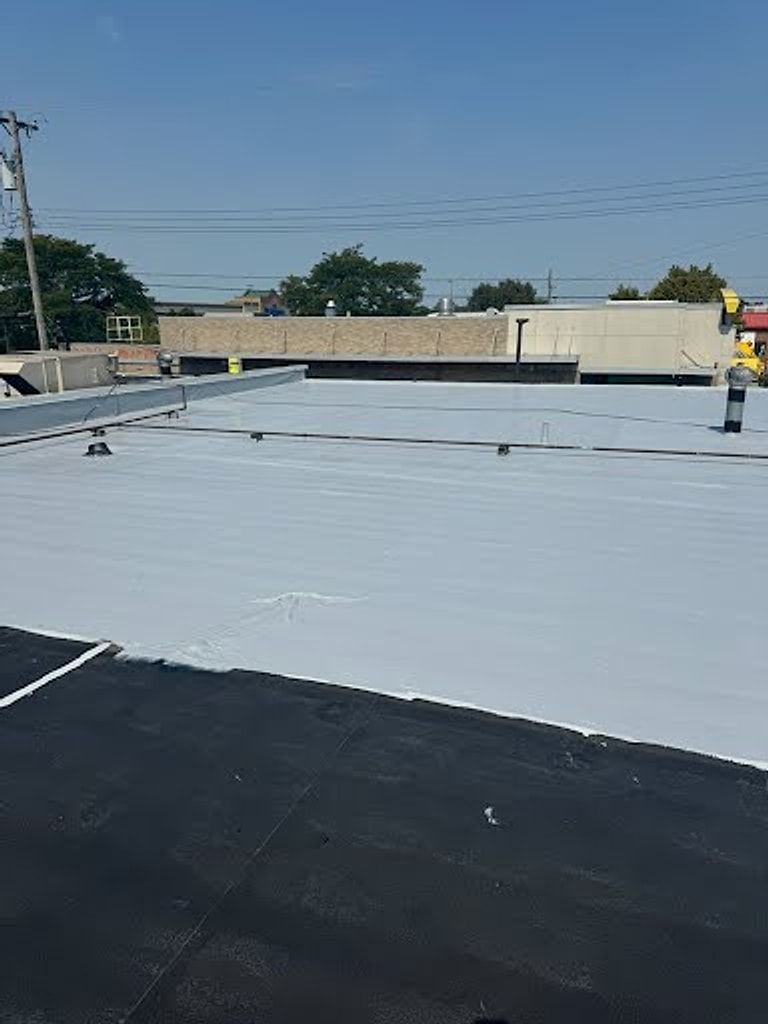
A roof coating is a liquid-applied membrane — usually silicone or acrylic — rolled or sprayed over an existing flat or metal roof to seal it, stop leaks and reflect heat. On a roof that’s still structurally sound, a coating can add many years of life for a fraction of what a tear-off costs. On a roof that’s already failed underneath, it only hides the problem for a while.
Be wary of anyone who says a coating fixes everything. It’s the wrong answer when:
A moisture check and a close look at the seams and fasteners tells you whether you’re a candidate before you spend anything.
Both are common. Silicone generally holds up better where water sits and weathers slowly; acrylic is often less expensive and easy to recoat but doesn’t like ponding water. The right one depends on the roof underneath, how it drains, and the budget. Our guide to roof coatings for flat and metal roofs goes deeper.
Coatings are one of several options for a tired flat or metal roof — see flat roofing and commercial roofing for the others. Request a free estimate and we’ll tell you honestly whether your roof is a candidate.
FAQ
Yes. Metal mobile-home and manufactured-home roofs are one of the places a coating makes the most sense: the seams and fasteners are sealed, then the whole roof gets a continuous coat that stops leaks and reflects summer heat.
Typically 10 to 20 years, depending on the product and how thick it's applied. When it wears thin, a sound coated roof can usually be cleaned and recoated rather than replaced.
When the insulation under a flat roof is wet, when a metal roof has rusted through in many places, or when seams and flashings have failed across the whole roof. A coating seals the surface; it can't fix what's already wrong underneath.
Coatings need a dry roof, a dry forecast and temperatures above the product's minimum while they cure, so most coating work in Southeast Michigan is done from late spring through early fall.
Related reading
Ice dam prevention for Michigan homes: why ice dams form, the attic fixes that stop them, an honest look at heat cables, and what to do if water gets in.
A commercial roof maintenance plan for Troy, Auburn Hills and Sterling Heights buildings: what to inspect, how often, and the records that protect a warranty.
A fall roof inspection checklist for Michigan homes: gutters, flashing, sealant, shingles, the attic, vents, branches and flat roof drains before snow.
Call and tell us what's going on with your roof, or send the estimate form. We'll set up a time to come out and look.