Roof Coatings for Flat and Metal Roofs: When They Pay Off
When a roof coating pays off on a flat or metal roof: silicone vs acrylic, which roofs qualify, the prep that matters, Michigan's cure window and lifespan.
A commercial roof maintenance plan for Troy, Auburn Hills and Sterling Heights buildings: what to inspect, how often, and the records that protect a warranty.
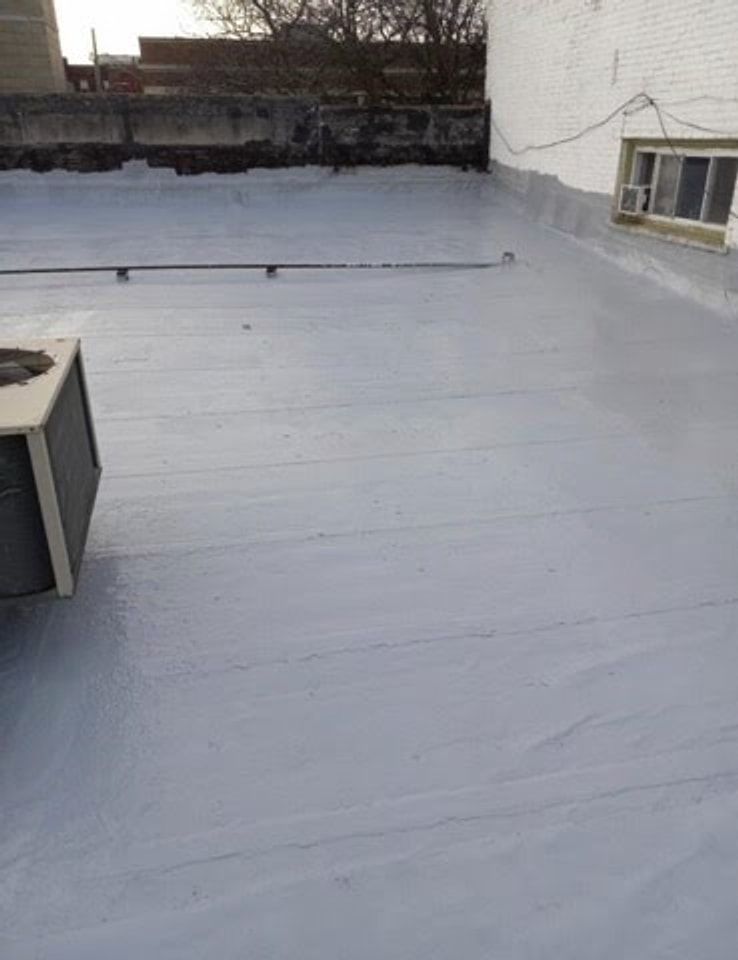
A good plan for commercial roof maintenance comes down to four things: a professional inspection every spring and fall, an extra look after any major storm, a written report with photos after every visit, and a budget that separates what needs fixing now from what can wait. Most flat-roof leaks start at drains, seams, flashings and the spots where other trades work. A plan that checks those on a schedule catches small problems while they are cheap, and it builds the paper trail most manufacturer warranties expect.
The National Roofing Contractors Association recommends inspecting low-slope roofs at least twice a year, preferably in spring and fall. That timing fits Southeast Michigan.
The spring visit shows what winter did. Freeze–thaw cycles open seams and crack old sealant, drifts load edges and curbs, and ice in a drain can loosen its clamping ring. The fall visit gets the roof ready for the next round: leaves out of the drains, open seams closed, pitch pans topped up before water gets in and freezes.
Add a visit after any storm with hail, straight-line wind or heavy wet snow. Add one after any big job by another trade, such as setting a new rooftop unit or running conduit. That work causes more damage than most owners expect.
On a strip center in Sterling Heights, an office building in Troy or a light-industrial building in Auburn Hills, the list is mostly the same.
| Item | What to look for | How often |
|---|---|---|
| Drains, scuppers, gutters | Missing strainers, loose clamping rings, debris, slow drainage | Spring, fall, after storms; more often under trees |
| Field of the membrane | Punctures, splits, blisters, shrinkage, worn surfacing | Spring and fall |
| Seams and laps | Open or lifted edges, failed seam tape, voids in welds | Spring and fall |
| Flashings at walls, parapets, curbs | Flashing pulling away, loose termination bars, cracked sealant | Spring and fall |
| Edge metal and coping | Loose fasteners, lifted edges, open joints | Spring, fall, after high wind |
| Pipes, vents, pitch pans | Shrunken or cracked pitch pan fill, split boots, rust | Spring and fall |
| Rooftop units | Screws or panels left behind, condensate dripping on the roof, grease at kitchen exhaust fans | Every visit and after service calls |
| Ponding | Water standing 48 hours after rain; dirt rings where it sat | After heavy rain |
| Top-floor ceilings | New stains, drips, musty spots | Monthly walk by building staff |
A few of these deserve more than a line.
Drains. On a flat roof the drains are the whole drainage system. One plastic bag over a strainer can back water up across a section of roof, and every inch of standing water adds about 5.2 pounds per square foot. NRCA treats water still there 48 hours after the rain stops as ponding, and many warranties exclude damage from it.
Pitch pans. These metal boxes of sealant around odd-shaped penetrations shrink away from the pipe as they age. Roofers treat them as a permanent maintenance item: check and re-crown them every visit so water sheds away.
Rooftop units. Your HVAC contractor is probably on the roof more than anyone. Many single-ply membranes are only about 0.045 inches thick, so a stray screw underfoot, a toolbox set down hard or an access panel leaned against a unit can puncture one. Walk pads from the hatch to each unit help, and so does a simple log of who went up and when. On restaurants, grease from kitchen exhaust makes EPDM and modified bitumen swell and breaks down seam adhesives, so grease containment belongs in the plan.
Every visit should end with a written report you can hand to an owner, a board or an insurer. A useful one has:
Keep the reports, invoices and access log in one file with the original warranty. If a leak ever becomes a claim, that file is your proof the roof was cared for.
Read the maintenance section of your warranty first, because it may write part of the plan for you. Many commercial roof warranties make regular maintenance a condition of coverage. Some require the owner to inspect at least twice a year and keep written records. Neglect, unapproved changes and damage caused by other trades are common exclusions.
Three habits keep you on the right side of that language:
If your warranty is unclear, ask the manufacturer to confirm the requirements in writing.
Two or three years of reports show whether repairs are tapering off or speeding up. That trend tells you when to start saving for the next roof.
When a roof leaks in several places, the next step is usually a moisture survey: an infrared scan at night, confirmed with small core cuts, that maps how much insulation under the membrane is wet. A few contained wet areas can be cut out and replaced. Wet spots scattered across the whole roof usually make a tear-off the better spend, and building codes don’t allow a new roof over one that is water-soaked or already has two layers.
If the membrane is aging but the insulation is dry, a roof coating can sometimes add years for a fraction of replacement cost. If it’s time to replace, our post on TPO, EPDM and modified bitumen covers the choice.
Ballpark: National cost guides put a single commercial roof inspection anywhere from about $250 for a small, simple roof to $2,500 or more for a large building or one that needs moisture testing. Roof size, access, the number of penetrations and the depth of the report drive the price.
Michigan’s code tables set the ground snow load for Oakland and Macomb counties at 25 pounds per square foot, and your roof’s design load is calculated from that. Snow itself varies a lot. FEMA puts light, dry snow at around 3 pounds per cubic foot and wet, heavy snow at up to about 21. Drifts pile deepest against parapets, taller walls and rooftop units, which is where overloads happen.
FEMA’s warning signs include sagging ceiling tiles, sprinkler heads dropping below the ceiling, doors that stick, and popping or creaking sounds. If you see them, clear that part of the building and call a structural engineer. Don’t send staff up with shovels: removing roof snow is often more dangerous than leaving it, and a metal shovel can cut a membrane.
Our crew inspects and maintains commercial roofs across Oakland and Macomb counties, including Troy. See our roof inspections page for what a visit covers.
At least twice a year, in spring and fall, as the National Roofing Contractors Association recommends. Add an inspection after any major storm and after other trades do significant work on the roof.
Many do. A lot of manufacturer warranties make regular, documented inspections a condition of coverage and exclude damage from neglect or from other trades. Read the maintenance section of your warranty and keep every inspection report.
The National Roofing Contractors Association defines ponding as water that stays on a roof more than 48 hours after the rain stops. Each inch adds about 5.2 pounds per square foot, and many warranties exclude damage from it.
When a moisture survey shows wet insulation spread across much of the roof, or when repairs keep growing year over year. A few contained wet areas can usually be repaired, but codes don’t allow a new roof over a water-soaked one.
Call and ask — or send the form and we'll come out, look, and give you a written estimate. Free for homes and businesses.
Keep reading
When a roof coating pays off on a flat or metal roof: silicone vs acrylic, which roofs qualify, the prep that matters, Michigan's cure window and lifespan.
TPO, EPDM and mod bit compared for a commercial flat roof in Michigan: seams, lifespan, cold weather, reflectivity, repairs and rough cost per square foot.
Ice dam prevention for Michigan homes: why ice dams form, the attic fixes that stop them, an honest look at heat cables, and what to do if water gets in.