How to Prevent Ice Dams Before Michigan Winter
Ice dam prevention for Michigan homes: why ice dams form, the attic fixes that stop them, an honest look at heat cables, and what to do if water gets in.
Residential & commercial
Most leaks come from a handful of places. We find the one that's actually letting water in, fix it properly, and tell you straight if the roof needs more than a patch.
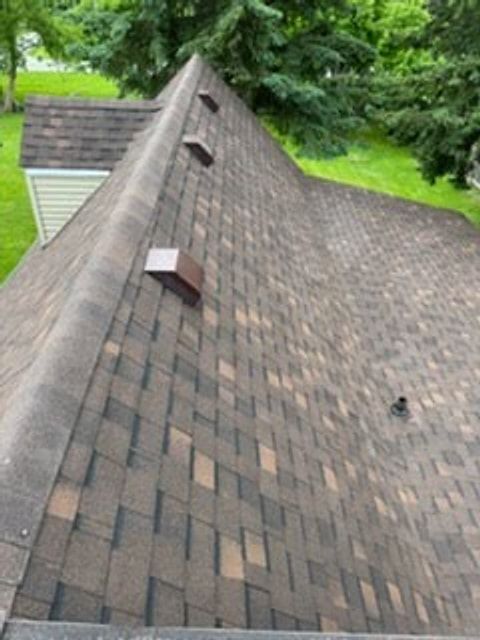
Roof repair means finding where water is actually getting in — which is often not directly above the stain on your ceiling — and fixing the cause, not just the symptom. Most leaks on homes around Rochester Hills come from flashing, pipe boots, valleys, missing or lifted shingles, or ice dams, and most of them can be fixed for a fraction of the cost of a new roof.
Water runs along the roof deck and down rafters before it drips, so the stain on the ceiling can be several feet from the hole. These are the usual suspects:
Southeast Michigan’s summer storms bring straight-line winds and hail, and winter brings heavy wet snow and ice. After a big storm, look from the ground for missing shingles, shingles hanging at the edges, dents in gutters and downspouts, and granules collecting at the downspouts. Our storm damage checklist covers what to look for safely without climbing up.
If the damage may be an insurance claim, it helps to have the roof looked at before the adjuster comes. You’ll know what’s actually damaged, and you’ll have photos of it. Our guide to hail damage and insurance claims in Michigan explains how the process generally works.
A repair is the right call when the damage is limited and the roof around it still has life left. When a roof is near the end of its life, repairs start chasing leaks from one spot to the next. If you’re on the fence, read roof repair or replacement: how to decide — or ask us to look and tell you plainly.
We repair roofs on homes and on commercial buildings throughout our service area. Request a free estimate, or call if water is coming in now.
FAQ
Move what you can out of the way, put a bucket under the drip, and if a ceiling is bulging with water, a small hole at the lowest point lets it drain into the bucket instead of bringing the drywall down. Stay off the roof in rain, wind or ice. Then call (586) 329-0038 and describe where and when it leaks.
If the problem is in one place and the rest of the roof still has years left, a repair is usually the right call. If the shingles are worn out everywhere and leaks keep appearing in new spots, repair money is better put toward a replacement. A good roofer will tell you which one you're looking at.
Yes. Wind-lifted and missing shingles, hail-bruised shingles, bent flashing and damage from fallen branches can all be repaired. We photograph what we find so you can see the damage yourself and share it with your insurance company if you decide to file a claim.
Wind-driven rain gets pushed sideways and uphill under flashing, shingles and vents that stay dry in a normal shower. It usually points to flashing at a wall or chimney, a cracked pipe boot, a valley, or gutters that overflow back under the roof edge.
Related reading
Ice dam prevention for Michigan homes: why ice dams form, the attic fixes that stop them, an honest look at heat cables, and what to do if water gets in.
A roof that only leaks in heavy rain usually has one weak detail: flashing, a pipe boot or a valley. What causes it and how roof leak repair finds the source.
A fall roof inspection checklist for Michigan homes: gutters, flashing, sealant, shingles, the attic, vents, branches and flat roof drains before snow.
Call and tell us what's going on with your roof, or send the estimate form. We'll set up a time to come out and look.