How to Prevent Ice Dams Before Michigan Winter
Ice dam prevention for Michigan homes: why ice dams form, the attic fixes that stop them, an honest look at heat cables, and what to do if water gets in.
A fall roof inspection checklist for Michigan homes: gutters, flashing, sealant, shingles, the attic, vents, branches and flat roof drains before snow.
A fall roof inspection is best done after the leaves come down and before the first hard freeze, which in Southeast Michigan usually means late October into November. Clear the gutters, then check the flashing, the sealant around pipes and vents, any missing or lifted shingles, the attic for daylight or damp, the ventilation, overhanging branches and any flat roof drains. Most of it you can do from the ground, a ladder at the gutter line, and the attic. Anything that means walking the roof is a job for someone with the gear.
The National Roofing Contractors Association’s long-standing advice is to look a roof over twice a year, spring and fall. Here the fall check matters more. Whatever you miss in October gets tested by freeze–thaw cycles, ice dams and heavy wet snow. A cracked pipe boot is a short repair on a dry fall afternoon. In February it can mean a stained ceiling and a crew working around ice.
Wait until the maples and oaks are bare. Clogged gutters hold water, the water freezes, and the ice adds weight to the hangers and gives an ice dam a head start at the eaves. Run a hose through each downspout to make sure it flows. Then check where the water lands: insurer and home-care guidance calls for downspouts to carry water at least six feet from the foundation. Look for sagging runs and hangers pulling out of the fascia.
Flashing is the metal at the joints: where the roof meets a wall, around the chimney, at skylights, in the valleys. From the ground, with binoculars if you have them, look for pieces that are lifted, rusted, bent or pulled away from the wall. At the chimney, look at the mortar where the upper flashing tucks in. Cracked mortar there lets water run behind the flashing, one of the most common leak sources on older homes.
Plumbing vents usually wear a rubber pipe boot, and roofers commonly see those collars crack from sun long before the shingles around them wear out. Look for splits in the rubber and a gap between the collar and the pipe. Caulk on exposed nail heads and flashing edges dries out and pulls loose with freeze–thaw. Fresh caulk is a stopgap, not a repair, so a cracked boot should be replaced or covered with a proper sleeve.
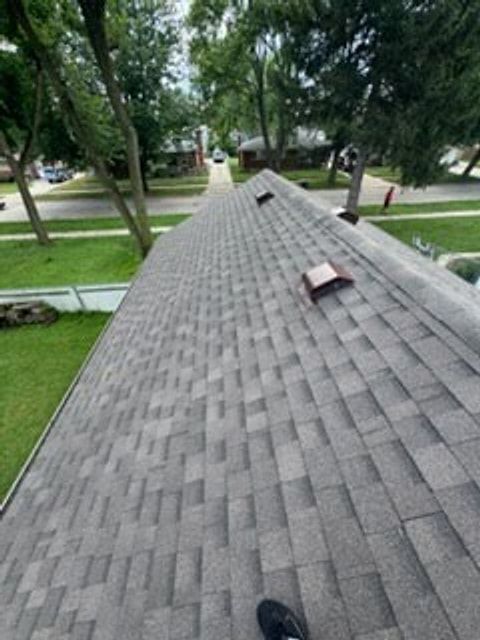
Summer thunderstorms and straight-line winds lift shingles and break the seal that holds each one down. Look at every slope for gaps, shingles that sit higher than their neighbors, and a horizontal crease line across a tab, which means the wind folded it. Check the gutters and downspout outlets for heavy piles of granules, too. A few after a new roof is normal. A lot on an older roof means the shingles are wearing through.
On a sunny afternoon, turn off the attic light and look for pinpoints of daylight through the roof deck. Then, with the light on, look for dark stains on the sheathing, rusty nail tips and damp or matted insulation. Check that the bathroom and kitchen fans vent outside, not into the attic. Go back up after the first real cold snap: frost on the nail tips means warm indoor air is leaking in, and that frost melts and drips on the first mild day.
A Michigan attic should stay close to outdoor temperature in winter, which keeps snow from melting on the upper roof and refreezing at the eaves. That takes air moving in low, at the soffits, and out high, at a ridge or roof vents. Look for insulation stuffed against the soffit vents and exhaust vents blocked by debris or nests. Building codes generally call for one square foot of net vent area for every 150 square feet of attic floor, or one per 300 when the vents are split properly between high and low.
Branches rub shingles bare, drop leaves into the valleys and gutters, and give squirrels a ladder to the soffits. Heavy wet snow and ice also bend limbs down onto roofs that clear them all summer. Roofing manufacturers suggest keeping branch tips at least six feet from the roof, and some arborists say ten. Leave cuts near the roofline or power lines to an arborist.
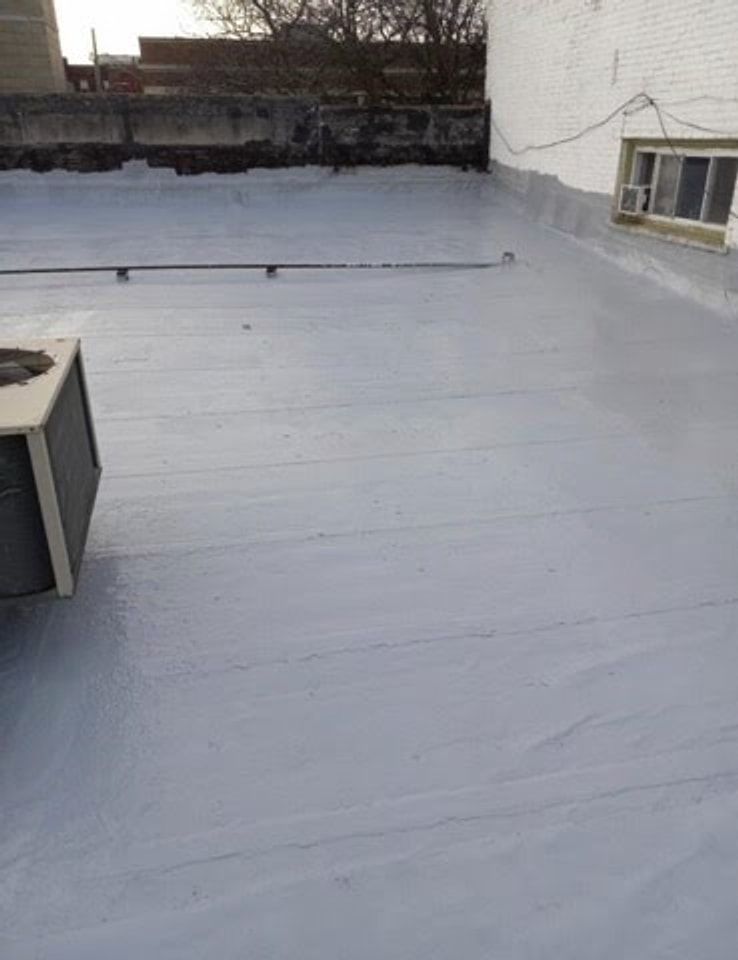
Flat and low-slope roofs, on a commercial building or over a porch or addition, drain through internal drains, scuppers or an edge gutter. Leaves and grit clog all three. Clear the strainers and openings, and check the membrane around each drain for cracks or lifted seams. The industry calls it ponding when water is still sitting 48 hours after the rain. If you’ve seen that this year, have it looked at before it becomes a sheet of ice and a load the roof wasn’t built for. More on flat roofing.
Asphalt shingles seal down with a strip of adhesive that needs sun and warmth to activate. Shingle manufacturers treat 40°F as the line for cold-weather installation. Below that, manufacturers call for hand-sealing each shingle with dabs of roofing cement, and shingles put on in late fall may not fully self-seal until spring.
Ballpark: Using National Weather Service normals for Detroit, average highs run about 62°F in October, the upper 40s in November and the upper 30s in December. October is comfortable shingle weather. November is workable with care. By December, a full replacement is mostly a job for when it can’t wait.
Repairs have more leeway. But if the checklist turns up a roof that needs replacing, deciding in September or October gives you more room than deciding in December.
| Item | Where you check it | DIY or roofer |
|---|---|---|
| Gutters and downspouts | Ladder at the gutter line | DIY if you’re steady on a ladder |
| Flashing and shingles | Ground, with binoculars | Look yourself; repairs are roofer work |
| Pipe boots and sealant | Ground or roof | Roofer for anything on the roof |
| Attic stains, daylight, frost | Inside the attic | DIY; walk on the joists only |
| Ventilation | Attic and soffits | Look yourself; changes are roofer work |
| Branches | Ground | Arborist near the roof or power lines |
| Flat roof drains | On the roof | Building staff or roofer |
If you’d rather hand the whole list to someone, that’s what a roof inspection is for. If the list turns up a cracked boot, lifted flashing or a stain in the attic, it’s a roof repair call, and it’s easier to schedule in October than in January. If it turns up curling, granule-bare shingles everywhere, read how long a roof lasts in Michigan before you decide what to do next.
After most of the leaves have dropped and before the first hard freeze, which in Southeast Michigan usually means late October through November. That lets you clear the gutters and catch summer storm damage before snow and ice arrive.
You can check a lot from the ground, a ladder at the gutter line and the attic: gutters, visible shingles and flashing, attic stains, frost and ventilation. Walking the roof itself, and any repair up there, is safer left to a roofer.
Shingle manufacturers treat 40°F as the cold-weather line. Below it, they call for hand-sealing, and the shingles may not fully seal until spring, so October is the easiest fall month for a replacement and December the hardest.
Frost on the nails and roof deck means warm, moist air from the house is leaking into a cold attic, often at the attic hatch, light fixtures or a bath fan venting into the attic. Sealing those leaks and keeping the attic ventilated usually fixes it.
Roofing manufacturers suggest keeping branch tips at least six feet from the roof, and some arborists recommend ten. Have an arborist handle any cutting near the roofline or power lines.
Call and ask — or send the form and we'll come out, look, and give you a written estimate. Free for homes and businesses.
Keep reading
Ice dam prevention for Michigan homes: why ice dams form, the attic fixes that stop them, an honest look at heat cables, and what to do if water gets in.
How attic ventilation works on a Michigan home: intake and exhaust, the 1/150 and 1/300 rules, blocked soffits, and the signs your attic isn't breathing.
A commercial roof maintenance plan for Troy, Auburn Hills and Sterling Heights buildings: what to inspect, how often, and the records that protect a warranty.